
-
Wynthorix Yellow Fit-Over Night Driving Glasses – Glossy Black
Normaler Preis $24.99 USDNormaler PreisStückpreis pro -
Wynthorix Yellow Fit-Over Night Driving Glasses – Matte Black
Normaler Preis $24.99 USDNormaler PreisStückpreis pro -
Wynthorix Yellow Fit-Over Night Driving Glasses with Visor Clip & Protective Storage Box – Tortoiseshell
Normaler Preis $34.99 USDNormaler PreisStückpreis pro$4.30 USDVerkaufspreis $34.99 USD -
Wynthorix Yellow Fit-Over Night Driving Glasses with Visor Clip & Protective Storage Box – Glossy Black
Normaler Preis $34.99 USDNormaler PreisStückpreis pro -
Wynthorix Yellow Fit-Over Night Driving Glasses with Visor Clip & Protective Storage Box – Matte Black
Normaler Preis $34.99 USDNormaler PreisStückpreis pro$4.30 USDVerkaufspreis $34.99 USD -
Wynthorix Yellow Fit-Over Night Driving Glasses with Car Visor Clip – Tortoiseshell
Normaler Preis $29.99 USDNormaler PreisStückpreis pro$4.30 USDVerkaufspreis $29.99 USD -
Wynthorix Yellow Fit-Over Night Driving Glasses with Car Visor Clip – Glossy Black
Normaler Preis $29.99 USDNormaler PreisStückpreis pro -
Wynthorix Yellow Fit-Over Night Driving Glasses with Car Visor Clip – Matte Black
Normaler Preis $29.99 USDNormaler PreisStückpreis pro$4.30 USDVerkaufspreis $29.99 USD -
Wynthorix Yellow Fit-Over Night Driving Glasses – Tortoiseshell
Normaler Preis $24.99 USDNormaler PreisStückpreis pro$4.30 USDVerkaufspreis $24.99 USD
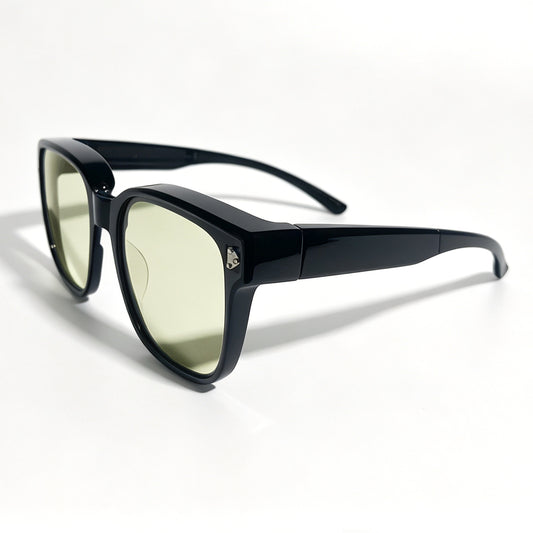

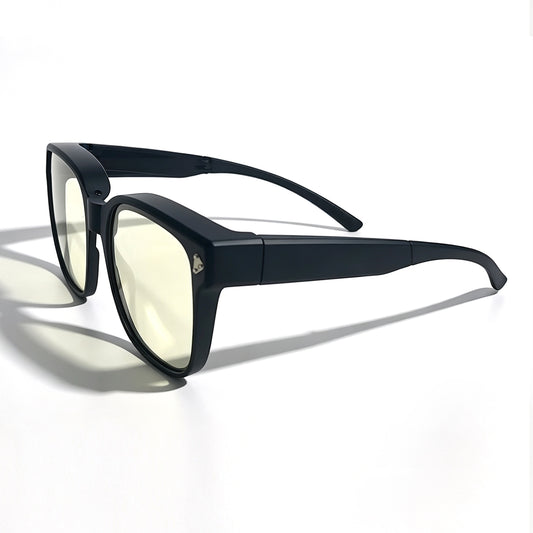


See the Night Driving Glasses Up Close
Watch this quick unboxing from Brandon [@milesworthadding] to see the fit-over glasses, included accessories, and what comes in the Essential Setup package.


Why Yellow Lenses Are Used for Night Driving
Yellow lenses filter some short-wavelength blue light. By selectively reducing this part of the visible spectrum, the yellow tint can increase perceived contrast in certain low-light conditions, which may help road edges, lane markings, signs, and other details feel more defined.
This is why yellow and amber lenses are often used for driving at dusk, in overcast conditions, rain, fog, and other low-light situations. They are not night-vision technology and cannot add light to a dark road, so the lens also needs sufficiently high VLT to avoid making the nighttime view unnecessarily dark.

Why VLT Matters More Than How Dark the Yellow Lens Looks
VLT, or visible light transmission, measures how much visible light passes through a lens. For night driving, this matters because there is already less available light than during the day.
Yellow lenses can range from a very light tint to deep yellow or amber. A darker tint may look stronger, but it also typically blocks more visible light. That means a darker yellow lens is not automatically a better night-driving lens.
Wynthorix yellow lenses are tested at 92.59% VLT, allowing most visible light to pass through while maintaining a light yellow tint. Rather than choosing night-driving glasses based only on how yellow they look, compare the actual VLT whenever that information is available.

Yellow, Amber, and Light-Tint Lenses for Night Driving
Yellow, amber, and light-tint lenses can vary considerably in both color and darkness. Yellow and amber lenses are often used because the tint can filter some shorter-wavelength blue light, creating a contrast-enhancing effect in low-light conditions. However, a deeper yellow or amber color does not necessarily mean a lens is better for night driving.
For night driving, higher VLT is generally preferable to lower VLT because it allows more visible light to pass through the lens. A darker lens with lower VLT blocks more light, which can make an already-dark nighttime view feel dimmer. When comparing yellow or amber glasses for night driving, check the visible light transmission (VLT) rather than judging the lens by color alone. Wynthorix high-VLT yellow lenses are tested at 92.59% VLT, meaning they allow most visible light to pass through while still providing a yellow tint.
Do Yellow Lenses Make the Road Brighter at Night?
Yellow lenses do not increase the amount of light on the road. Their purpose is different: the yellow tint filters some short-wavelength blue light, which can create a contrast-enhancing effect in low-light conditions.
At the same time, a lens that is too dark can reduce too much visible light—something you generally want to avoid when driving at night. That is why Wynthorix uses a light yellow, high-VLT lens tested at 92.59% VLT: it provides the yellow tint while still allowing most visible light to pass through.

Anti-Reflective Coating Helps Reduce Lens Reflections
Yellow tint and anti-reflective coating serve different purposes. The yellow tint filters some short-wavelength blue light, which can create a contrast-enhancing effect in low-light conditions. The anti-reflective coating helps reduce reflections from the lens surfaces caused by light sources such as headlights, streetlights, traffic signals, and dashboard lights.
In testing, measured lens reflectance decreased from 8.954% without the AR coating to 5.9825% with the coating—a 33% reduction in measured reflectance.
Wynthorix combines this anti-reflective coating with 92.59% VLT yellow lenses to maintain high visible light transmission while helping reduce distracting lens-surface reflections.
Learn more about anti-glare night driving glasses.

Yellow Night Driving Glasses That Fit Over Prescription Glasses
Wynthorix yellow night driving glasses use a fit-over frame designed to be worn over many everyday prescription glasses up to 61 mm / 2.40 in wide × 53 mm / 2.09 in high. This lets you keep your normal prescription correction while adding the 92.59% VLT light-yellow lenses.
Because fit-over eyewear places a second pair of lenses in front of your prescription glasses, some wearers may notice additional reflections under certain lighting conditions or viewing angles. Need help checking the fit or want to compare fit-over, clip-on and prescription options? See our fit-over night driving glasses guide.
I prefer this over adding a separate sizing sentence because the first paragraph then answers three questions in a natural order:

Keep Your Yellow Driving Glasses Within Reach
Night driving conditions can change quickly, so your glasses should be easy to reach when you need them. Choose the setup that fits how you want to store and access your glasses. The Essential setup includes the glasses only. The Visor Clip setup adds a clip so you can attach the glasses to your car visor for quick access. The Complete setup includes both the visor clip and a protective storage box for added protection when the glasses are not in use.
All three setups use the same 92.59% VLT yellow lenses, anti-reflective coating, non-polarized design, and fit-over frame. The difference is simply how you prefer to store and access your glasses in the car.

Why Our Yellow Night Driving Lenses Are Non-Polarized
Wynthorix yellow night driving glasses use non-polarized lenses. Polarized lenses can interfere with the visibility of some in-car displays, including LCD dashboards, navigation screens, and head-up displays, depending on the viewing angle.
For night driving, we chose non-polarized lenses to avoid the screen-readability issues polarization can cause with some in-car displays.
FAQs About Yellow Glasses for Night Driving
Do yellow glasses help with night driving?
Yellow glasses may help some drivers feel more contrast in low-light conditions because the yellow tint can filter some short-wavelength blue light, creating a contrast-enhancing effect. This may help road edges, lane markings, and other details feel more defined.
But lens darkness matters. A darker yellow lens may reduce too much visible light and make the road feel dimmer at night. That is why we choose a high-VLT yellow lens, tested at 92.59% VLT, to let most visible light through while still providing a contrast-enhancing yellow tint.
What does 92.59% VLT mean?
92.59% VLT means the lens allows 92.59% of visible light to pass through. For night driving, higher VLT is important because it helps avoid an overly dark view.
Are these night vision glasses?
No. These are yellow night driving glasses, not electronic or infrared night vision glasses. They are designed to support a brighter, more comfortable view with a high-VLT yellow tint (tested at 92.59%) and anti-reflective coating.
Are yellow sunglasses the same as yellow glasses for night driving?
No. Many yellow sunglasses are made for daytime style or sun protection, and some may be too dark for nighttime use. Yellow glasses for night driving should be judged by visible light transmission, not just lens color.
Not all yellow glasses for night driving are the same. Before buying, check the VLT if it is available. A higher VLT means the lens lets more visible light through, which is especially important for night driving. Our yellow lenses are tested at 92.59% VLT to help keep the view brighter while still providing a contrast-enhancing yellow tint.
Are amber lenses the same as yellow lenses for night driving?
Amber and yellow are overlapping descriptions rather than precise standardized lens categories. Amber usually refers to a deeper, more orange-yellow tint, but actual darkness varies by product. For night driving, compare the VLT rather than relying only on whether a lens is called yellow or amber.
Are darker yellow lenses better for night driving?
No. A darker yellow lens is not automatically better for night driving. Darker lenses generally have lower visible light transmission (VLT), which means less light reaches your eyes. Because nighttime driving already takes place in low-light conditions, blocking too much additional light can make the road appear dimmer. Wynthorix uses a light yellow lens tested at 92.59% VLT, so most visible light can still pass through while the yellow tint provides its contrast-enhancing effect.
Are yellow or clear lenses better for night driving?
Clear and yellow lenses work differently. Clear lenses do not add a tint and generally allow more visible light through. Yellow lenses filter some short-wavelength blue light, which can increase perceived contrast in low-light conditions, but the tint also reduces some visible light. For night driving, this is why VLT matters: a high-VLT yellow lens can provide the contrast-enhancing yellow tint while still allowing most visible light to pass through. Wynthorix yellow lenses are tested at 92.59% VLT.
Choosing Yellow Tinted Glasses for Night Driving
Yellow tinted glasses for night driving are available in different shades and levels of light transmission. Yellow and amber lenses can filter some short-wavelength blue light and create a contrast-enhancing effect in low-light conditions, but a darker tint is not necessarily better for nighttime use. When comparing yellow lens glasses for night driving, check the visible light transmission (VLT): a higher VLT allows more visible light to pass through, while a lower VLT means the lens blocks more light and may make an already-dark nighttime view feel dimmer.
Wynthorix high-VLT yellow night driving glasses are tested at 92.59% VLT, allowing most visible light to pass through while still providing a yellow tint. The lenses also include an anti-reflective coating. In testing, measured lens reflectance decreased from 8.954% without the AR coating to 5.9825% with the coating—a 33% reduction in measured reflectance. For more information about headlight glare, lens reflections, and anti-reflective technology, see our anti-glare night driving glasses.
The lenses are also non-polarized. Polarized lenses can interfere with the visibility of some in-car displays, including LCD dashboards, navigation screens, and head-up displays, depending on the viewing angle. Wynthorix uses non-polarized lenses so drivers can continue to view in-car displays normally while using the 92.59% VLT yellow lenses.
The frame uses a fit-over design that can be worn over many prescription glasses, allowing drivers to keep their normal prescription correction while adding the yellow night-driving lenses. For sizing, compatibility, and more information about wearing night driving glasses over prescription eyewear, see our fit-over night driving glasses collection.
Wynthorix yellow driving glasses are available in three setups. Essential includes the glasses only. Visor Clip includes the glasses and a visor clip for keeping them within reach in the car. Complete includes the glasses, visor clip, and protective storage box. All three setups use the same 92.59% VLT yellow lenses, anti-reflective coating, non-polarized design, and fit-over frame.
Explore Night Driving Glasses by Need
-

Night Driving Glasses
Shop Night Driving GlassesExplore the full night driving glasses collection to compare features, frame colors, and storage setups.
-

Anti-Glare Night Driving Glasses
Shop Anti-Glare Night Driving GlassesExplore glasses for drivers especially concerned about bright headlights, LED lights, lens reflections, and nighttime glare.
-

Fit-Over Night Driving Glasses
Shop Fit-Over Night Driving GlassesShop night driving glasses designed to fit over many everyday prescription frames.


